Custom Bucket Hats Manufacturing: Materials, Techniques, and MOQ
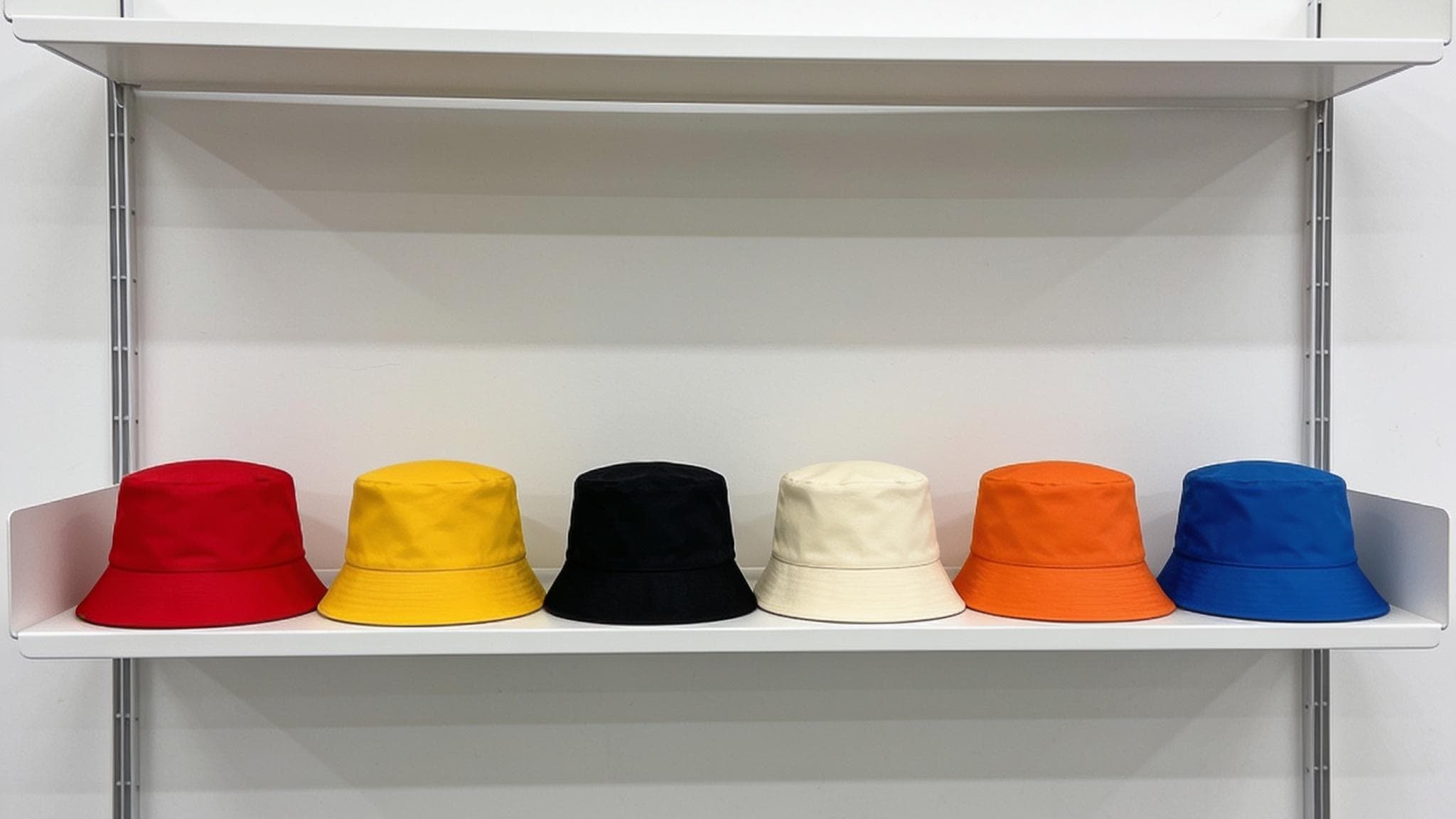
The bucket hat has outgrown its 1990s streetwear reputation. Today it shows up on outdoor and fishing brands, festival and lifestyle labels, golf collections, and private-label fashion lines — often as a signature reorder item rather than a one-off novelty. That popularity has also exposed how differently a bucket hat can be built. Fabric choice, brim construction, and print method all change the finished product, and getting them wrong is an expensive way to learn. This guide covers what actually matters when you brief a custom bucket hats manufacturer.
1. Why Bucket Hats Are Having a Moment
Three separate customer bases are driving demand at once, and each wants a different product:
- Streetwear and festival brands want bold all-over prints, tie-dye, and reversible designs — the hat is the statement piece.
- Outdoor and fishing brands want UPF sun protection, wider brims, and durable, quick-drying fabric.
- Golf and lifestyle labels want a clean, structured silhouette with embroidered logos and a more tailored fit.
Because the construction is simple — six or eight fabric panels, a brim, and an eyelet or two for ventilation — it is one of the more forgiving headwear styles to customize. But that same simplicity means small construction mistakes (an uneven brim, a puckered crown seam) are highly visible on the finished product.
2. Fabric Choice Determines Everything Else
The fabric is not just a look — it decides which decoration methods will actually work. At Sanjin we cut bucket hats from five main materials:
Cotton Canvas
The most common choice. Holds its shape well, takes embroidery and screen print cleanly, and has a soft, lived-in look after a few washes. Best for lifestyle, casual, and corporate gifting lines.
Denim
Heavier and more structured than canvas, with visible weave texture. Popular for streetwear drops and retro-styled collections. Works well with contrast stitching and metal eyelets, but is not ideal for fine-detail prints.
Nylon
Lightweight, water-resistant, and quick-drying — the standard for outdoor, fishing, and travel-oriented hats. Nylon is a polyester-family synthetic, which makes it the fabric of choice for sublimation (all-over dye) printing.
Terry (Toweling)
A looped-pile cotton fabric with a distinct textured surface. Gives a retro, tactile finish that stands out on a shelf. Works best with embroidery or patch application rather than fine printing, since the surface texture breaks up sharp print edges.
Recycled rPET
Woven from recycled plastic bottles, rPET performs similarly to virgin polyester/nylon and supports sublimation printing, but lets brands market a genuine sustainability claim with GRS-traceable material. Increasingly requested by outdoor and eco-conscious brands.
3. Matching Decoration Technique to Fabric
This is where most first-time buyers get tripped up: not every print method works on every fabric.
- All-over sublimation print requires a polyester-based fabric (nylon or rPET). The dye bonds to synthetic fibers under heat, so it will not transfer properly onto cotton canvas, denim, or terry.
- Embroidery works on any fabric but looks and holds up best on cotton canvas, denim, and terry, where the stitching sits on a stable, structured base.
- Screen printing is best suited to cotton canvas — flat, absorbent, and able to hold sharp edges for logo-style graphics.
- Tie-dye is a wet dyeing process applied to cotton canvas panels before cut-and-sew, giving each hat a unique gradient pattern — popular for festival and limited-run drops.
- Reversible construction (two finished fabrics sewn back-to-back so the hat can be worn either side out) works with most fabric combinations but adds cutting and sewing time, and is usually quoted separately.
Brim width is also fully adjustable per style — narrow brims (around 5–6cm) read more streetwear, while wider brims (8cm+) add sun coverage for outdoor use. Lining can be customized too, from a simple satin sweatband to a fully printed inner panel for a branded finish that shows when the hat is worn tilted back.
4. Sizing and Fit
Bucket hats are typically produced in two size bands — S/M (roughly 55–57cm head circumference) and L/XL (roughly 58–60cm) — though exact grading varies by target market and can be adjusted to your spec sheet. Most orders also request an adjustable inner drawstring or elastic insert in the sweatband, which lets one size band fit a wider range of head sizes and reduces the number of SKUs a brand needs to stock.
5. Quality Checks That Actually Matter
A bucket hat has few components, which means defects are easy to spot — and hard to hide. Our QC process checks:
6. MOQ, Sampling, and Lead Time
Sanjin has been manufacturing bags and headwear since 2014, from a 48,000㎡ facility in Gaoqing County, Shandong, with 200+ skilled production workers and BSCI, ISO 9001, and SeDex certification. For custom bucket hats specifically:
- Sampling starts at 1 piece, so you can confirm crown shape, brim stiffness, and print placement before committing to a production run. Sample turnaround is typically 7–14 days depending on fabric and decoration method.
- Bulk MOQ starts at 200 pieces per style and color. Mixing colorways within a style is possible — talk to your merchandiser about how color changes affect the per-unit breakdown.
- Bulk production lead time runs 7–20 days after sample approval, depending on fabric availability, order volume, and decoration complexity (all-over sublimation and multi-panel reversible builds take longer than a single-color embroidery run).
The most common mistake we see is brands approving a sample in one fabric and then switching fabric for the bulk order to save cost — print method, brim stiffness, and hand-feel can all change. If cost is a concern, ask for fabric alternatives before the sample stage, not after.
Ready to Produce?
Work With a Verified Bucket Hat Manufacturer
Sanjin is a BSCI, ISO 9001, and SeDex certified manufacturer based in Shandong, China. Sampling from 1 piece, bulk MOQ from 200 pieces per style/color, and lead times as fast as 7 days.
Get a Free Quote